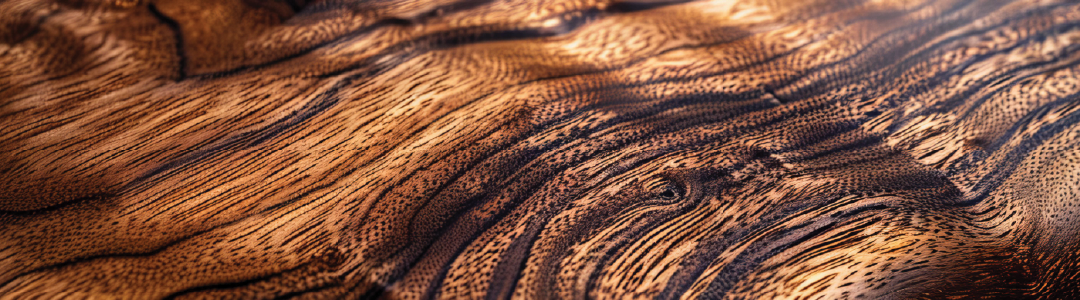
WOOD is a visually striking group exhibition featuring eight acclaimed contemporary artists from across Canada. From traditional birch bark biting to immersive audio/visual installation, sculpture, weaving, and carving, these artists showcase the incredible versatility of wood as both medium and message. Participating artists include Peter von Tiesenhausen, Samuel Roy-Bois, Xiaojing Yan, Rita McKeough, Susan Point, Pat Bruderer, Stephen Noyes, and Nadia Myre. Together, they demonstrate how wood can shape—and be shaped by—cultural, environmental, and artistic identities.
The exhibition opens with a special artist panel on Friday, July 11, featuring many of the eight artists in conversation. A full-colour exhibition catalogue will also be released during the run of the show, offering deeper insight into the works and the ideas behind them.
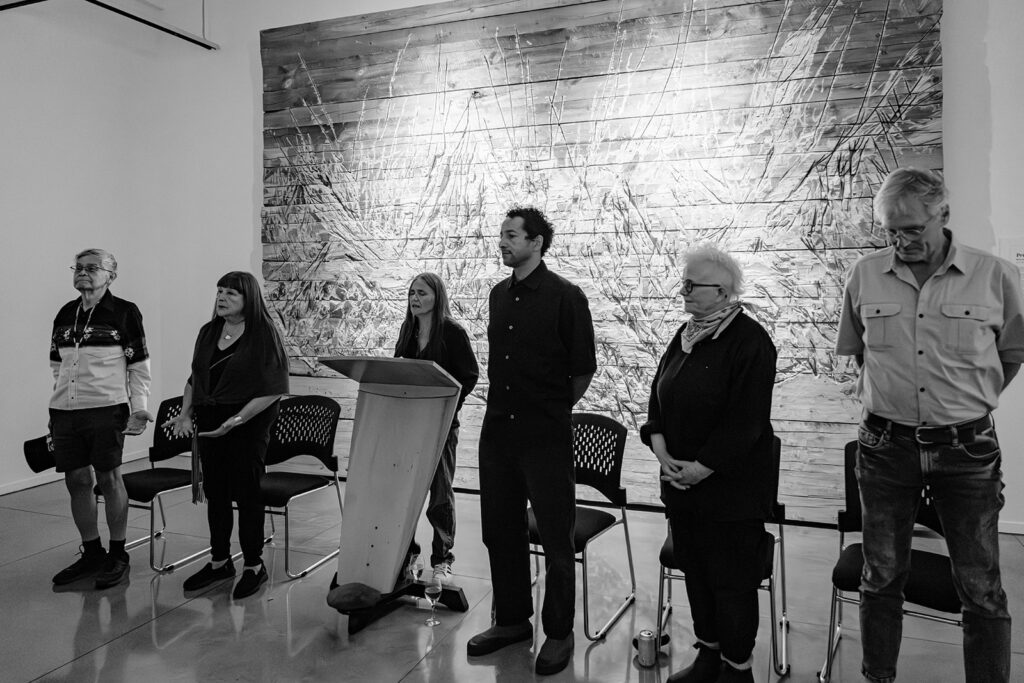
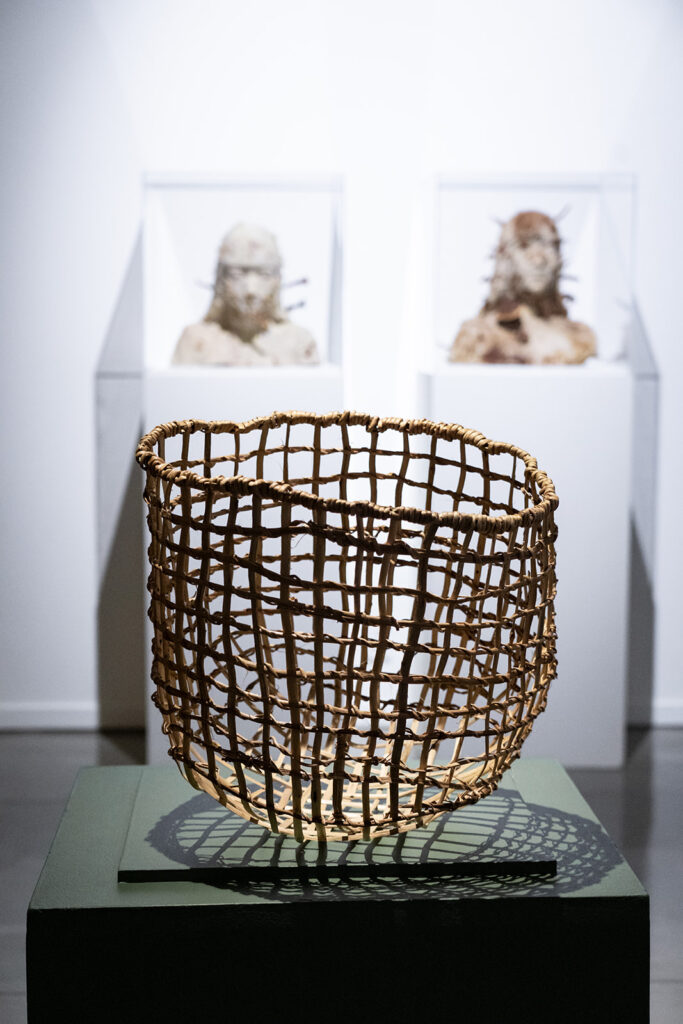
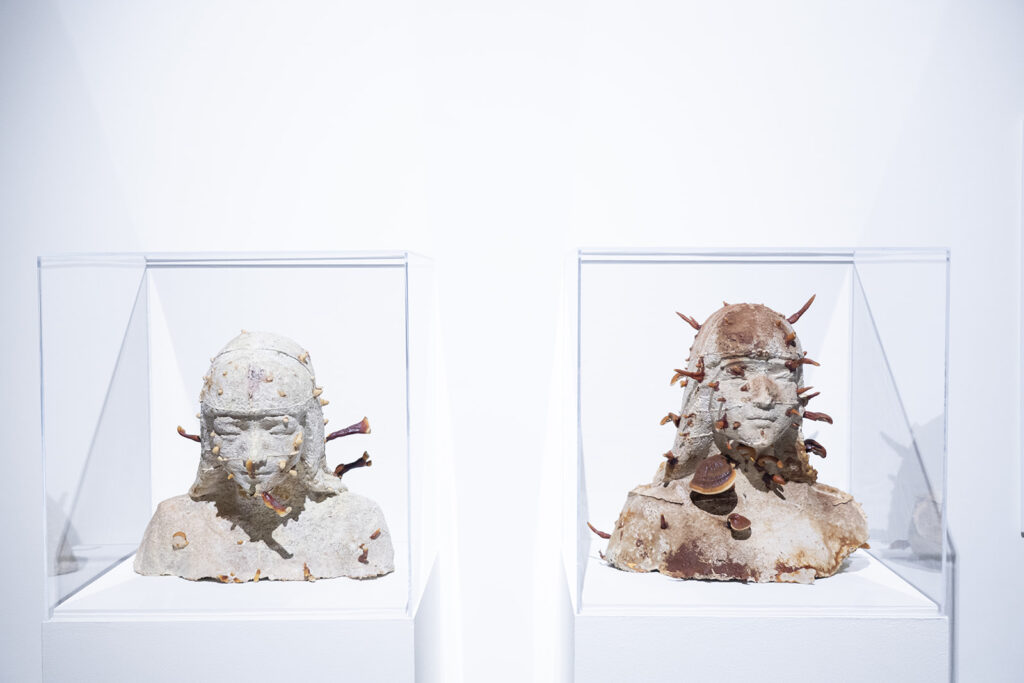
The artists featured in WOOD bring a wide range of perspectives and practices to the exhibition. Peter von Tiesenhausen is an Alberta-based artist known for his land-based works and environmental stewardship; his practice blends sculpture, installation, and performance to address themes of time and transformation. Samuel Roy-Bois, originally from Quebec and now based in British Columbia, is celebrated for his large-scale installations that blur the boundaries between art, architecture, and everyday life. Xiaojing Yan, a Chinese-Canadian artist, combines traditional Chinese materials like lingzhi mushrooms and ink with contemporary sculptural forms to explore cultural identity and transformation. Rita McKeough, a beloved figure in Canadian media art, has spent decades creating immersive installations and sound works that fuse activism, humour, and empathy. Susan Point, a Coast Salish artist from Musqueam, is internationally recognized for revitalizing Coast Salish design through contemporary wood carving, serigraphy, and public commissions. Pat Bruderer (Half Moon Woman) is one of the few remaining practitioners of the ancient Indigenous art of birch bark biting and is a passionate cultural educator and knowledge keeper. Stephen Noyes blends traditional woodworking with modern design, crafting refined objects that speak to place and material and using cedar gathered from both British Columbia and Washington state to craft the burden basket on display. Nadia Myre, a member of the Kitigan Zibi Anishinabeg First Nation, is a multidisciplinary artist whose work in beading, sculpture, and participatory projects has been shown around the world, including a retrospective currently showing at the National Gallery of Canada, and the Biennale of Sydney.
“The incredible challenge and compensatory reward of group exhibitions that illustrate the diversity of any given medium, such as WOOD, is that a vast landscape of past and present, traditional and contemporary, political and personal, and all points in between starts to be seen,” says Nelson Museum Curator Arin Fay, “like the forest for the trees.”
Running concurrently in Gallery B is Deep Roots, an art/history exhibition that looks at the community’s connection to the forest, past and present. Through archival photographs, artifacts, contemporary artworks, film, and written reflections, Deep Roots reveals the ongoing relationship between people and place—and the many ways that connection has evolved over time.
Together, WOOD and Deep Roots invite visitors to reflect on the forest not just as a resource, but as a source: of creativity, memory, meaning, and identity. These exhibitions are more than the sum of their parts—they are a reminder that these multi-faceted stories, rooted in wood, are still growing.
With special thanks to the Canada Council for the Arts, the Province of BC, the BC Arts Council, the City of Nelson, and the Nelson & District Credit Union for funding these exhibitions.
WOOD Curatorial Essay
The WOOD exhibition, like the five previous group exhibitions in the series of medium-centric shows curated over the past eight years (WORD, Lost Thread, THROWN, SHUTTER, PULP) is the result of, and response to, a curatorial fascination with the elemental fulcrum of material within artistic practice. This primary precept allows for endless extrapolation, method, means, meaning, temperament, time … Artists are arbiters and creators of the vast scale of invention, spanning time-immemorial tradition and challenges to the established canon, and all points in between.
As a curator, researching these exhibitions is a joyful exercise—guided by curiosity, passion, and the unpredictability of discovery. This process feels like a natural extension of a life spent in awe of art and the artistic journey. In a world that often limits our choices and mobility—both individually and en masse—the work of artists feels not just meaningful, but vital. Art offers us anchors of hope and powerful examples of individual agency: to question, to reflect, and to reimagine. Group exhibitions provide a framework that invites broader inclusion and dialogue, offering scale and scope, and capturing the boundless diversity of creative expression along an ever-evolving continuum.
Over the years I have compiled dozens of documents housing this research, with designations that reflect the same type of cloak-and-dagger titles as these exhibits have. WOOD, for example, an inherent but purposeful oversimplification that is remedied by the work on display. By surveying the creative landscape with an eye to diversity, geography, tradition, innovation, and so on, the lists of artists begin to build themselves, illustrating interesting themes and categories, differences and similarities, era specific disciplines and sensibilities, and contemporary challenges and responses. It is a captivating study, and one fueled by observation and appreciation of art and artists, in Canada and elsewhere. Once compiled the lists are further contemplated, and the work of finding patterns and dissonance takes over, uncovering the root and far-flung branch of expression, the balance of geographic representation and reflection of the landscape, the position of artists within their own practice, the influence of academia and self-taught principles—all are factored in. The conversations with artists, and their willingness and interest in being a part of such a project is what makes these exhibitions both challenging and rewarding; the obvious questions about space, balance, design, and intention need to be parsed through and understood. It is not always advantageous to cluster a diverse group of artists together without a thread that holds the work and artists’ intentions together. It is a tall order, but when it works, it is a thing of beauty.
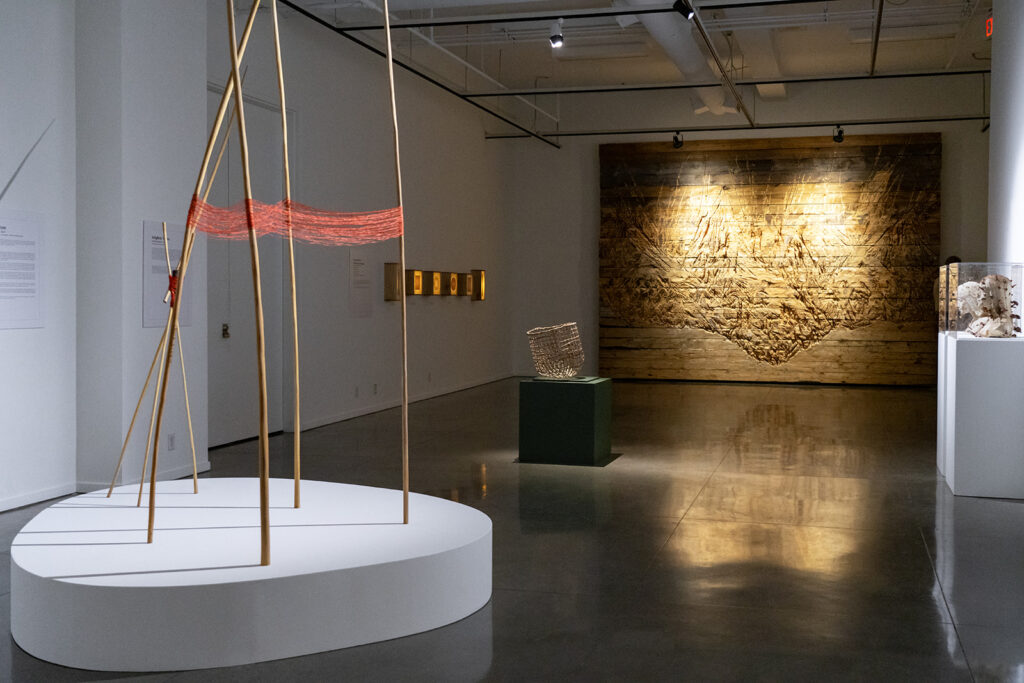
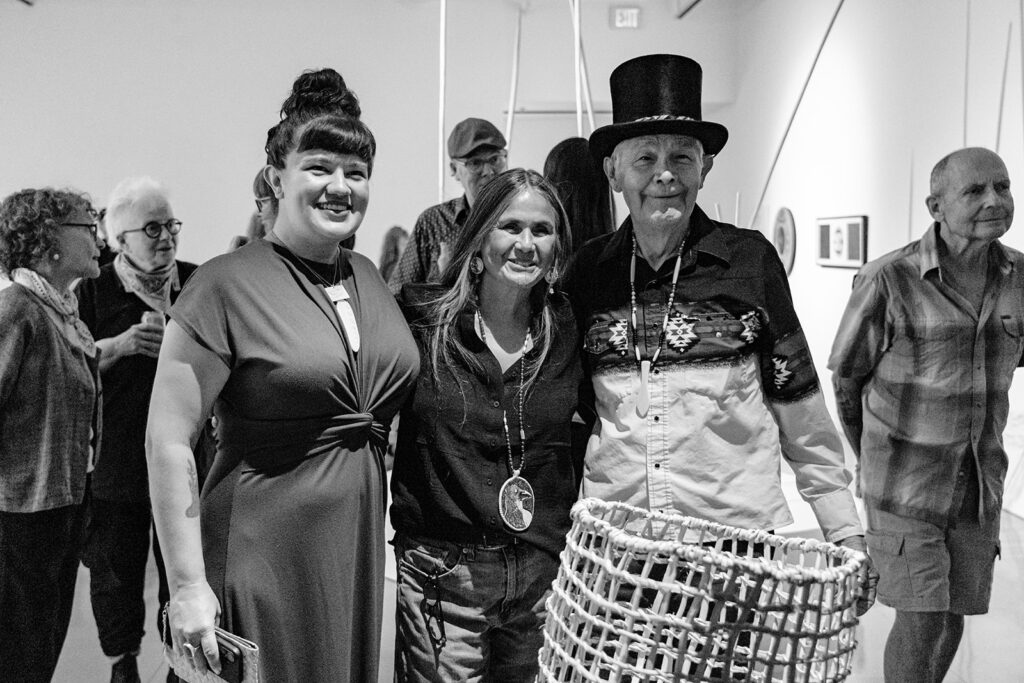
The Burden Basket created by Stephen Noyes, member of the Lakes (Sinixt), Colville Confederated Tribes, is the literal and figurative heart of the WOOD exhibition —tying what is within the walls of the gallery directly to the land and grounding the broader conversation to the place where the gallery is situated. Relying on traditional knowledge, Stephen collected cedar from both sides of the border that divides Canada from the U.S., a symbolic and meaningful action which makes the basket representative of so much more than a beautiful, utilitarian, or decorative object. The basket illustrates the arbitrary nature of borders, of lines drawn on maps, now intertwined in stunning symmetry. Stephen’s work refutes extinction and shows by its shape and shadow the continuing resilience of people creating culture with a nod to the past and an eye on the future.
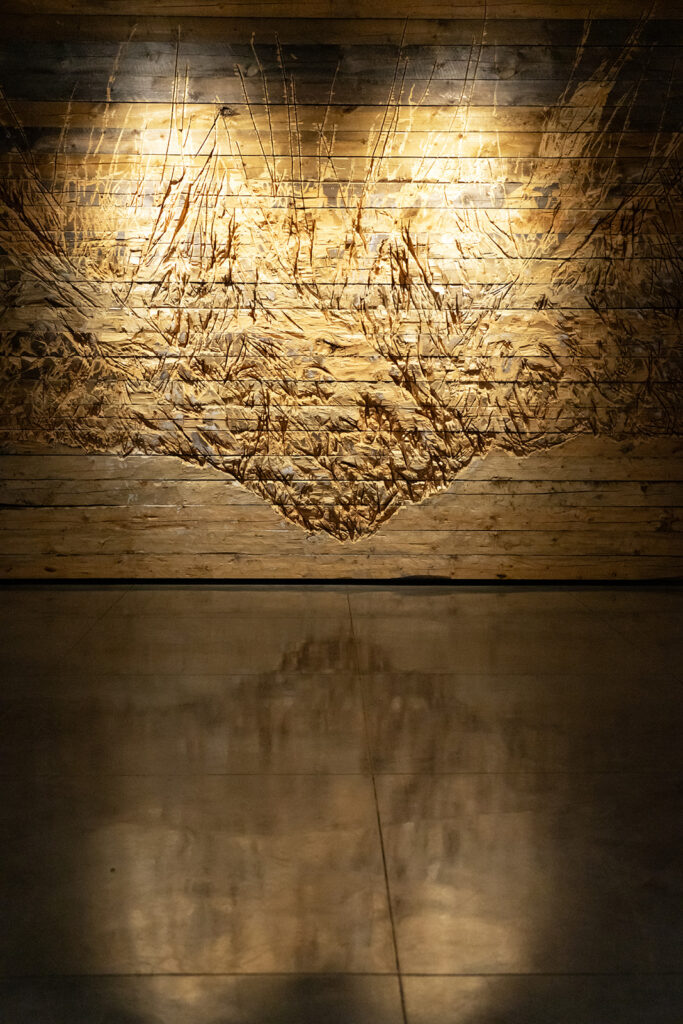
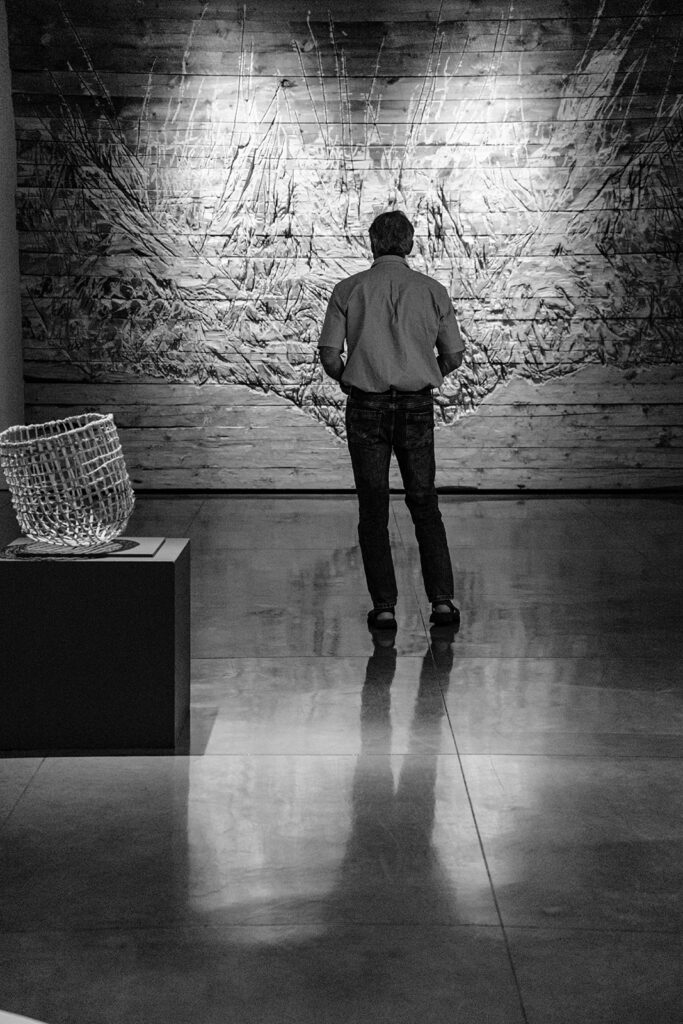
In a similar connection to land and materials, Peter von Tiesenhausen’s Relief brings pieces of the place where he and his family live—a Northern Alberta hamlet called Demmitt—to the gallery in an epic relief: an antithesis of its name in some respects, as it ruminates on the wall full of rage and contemplation. The impulse to create such an edifice is where hope resided, in every crack and hard-earned crevice, an inherent contradiction between beauty and destruction that defines the work and the artist. The twisted, infested timbers, too distorted for structure, are hewn into a mountain, with a brutalist flourish, upended and further warped, a reversal of reality most fitting for the times we are in.
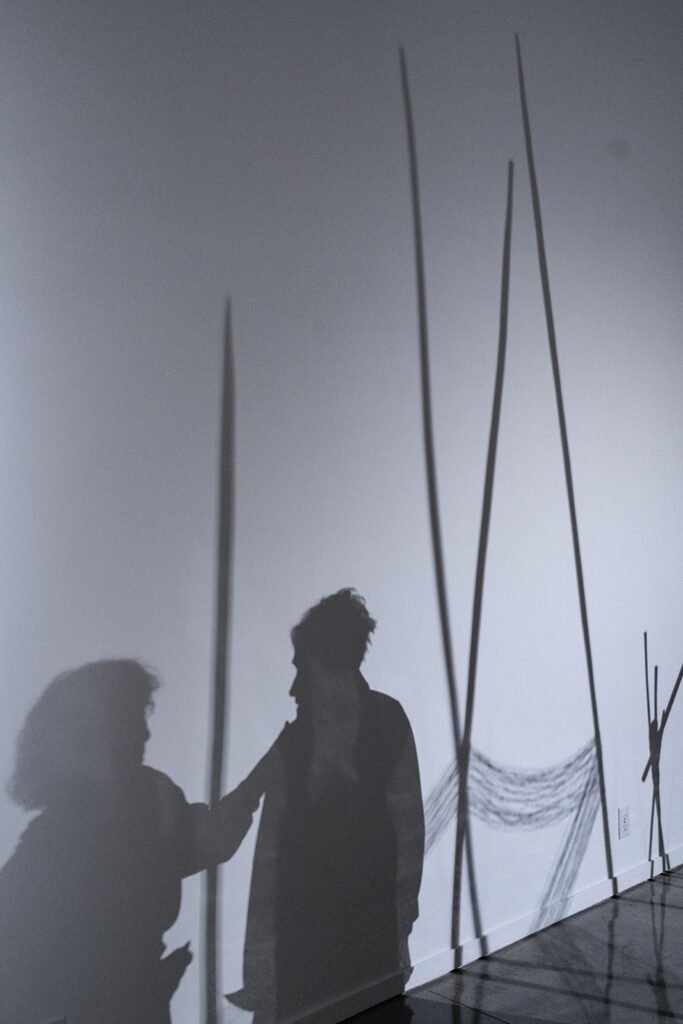
The Dreamers by artist Nadia Myre explores community, Indigenous identity, and landscape, specifically the role of fishing across a cultural continuum. The white ovoid riser sets the scene apart, floating like a small, imagined land festooned with elemental architecture; a net and tool assemblage of beautifully polished bisected wood that reaches the sky, like an echo of the trees of origin, wrapped round with waxed red thread and punctuated with stones. The Dreamers ask us to consider the perfection of nature and symbiosis of sustenance and landscape, people and place.
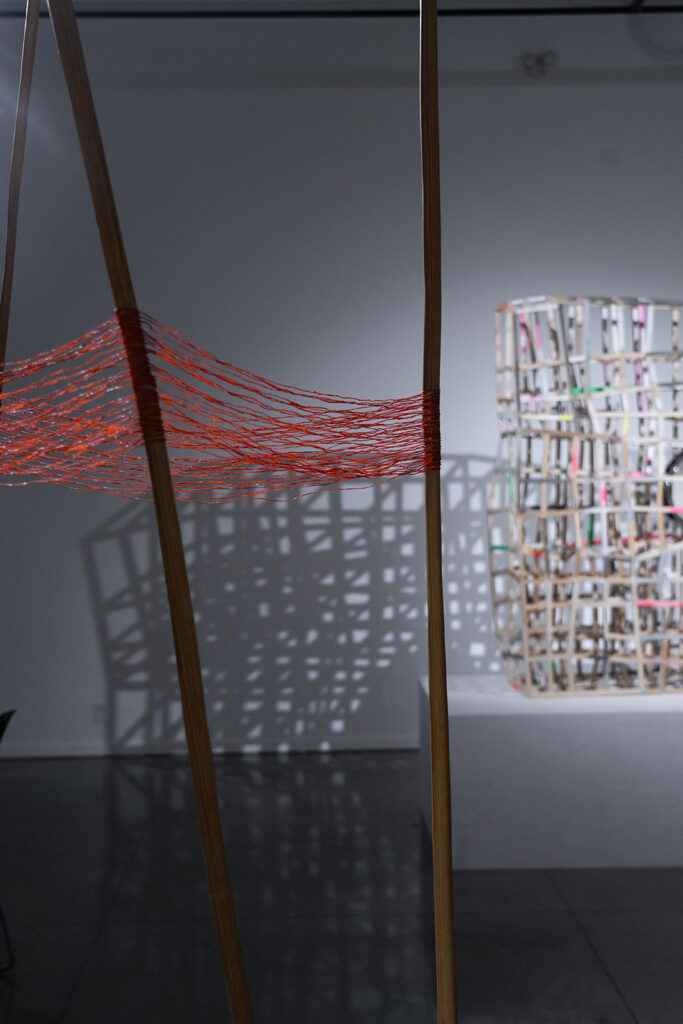
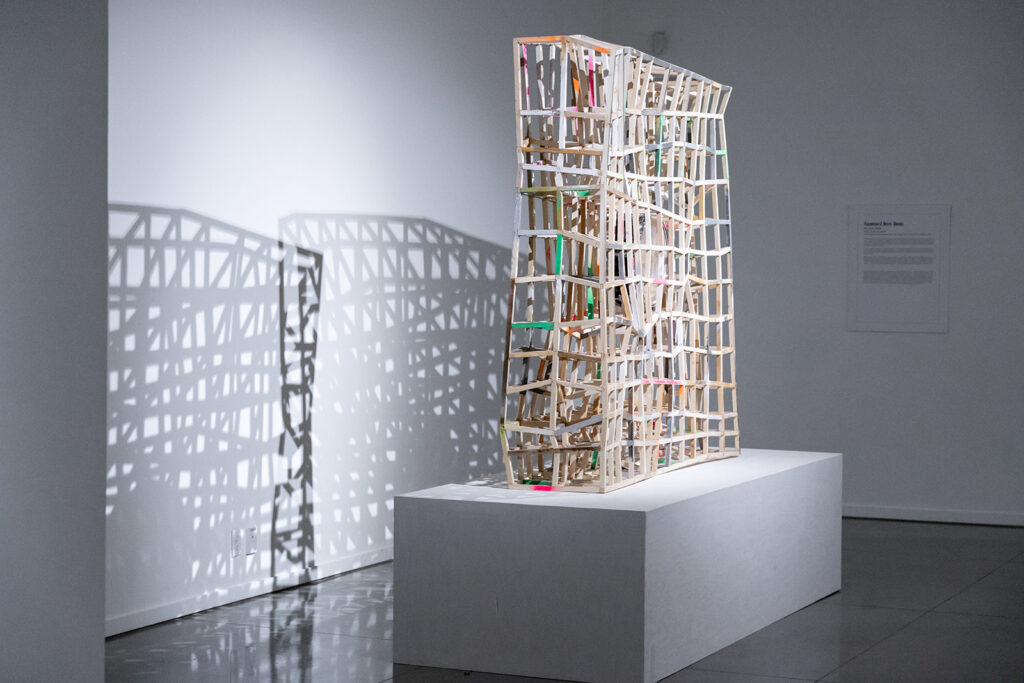
Samuel Roy-Bois questions the architecture of the space and possibly all construction, with My Sun, hijacking the predictable rules of carpentry and creating perfectly imperfect patterns, wrapped around a conundrum. The inclusion of the instrument, both personal and recognizable, gives the work unexpected emotion but also underscores the non sequitur nature of the conversation being presented, full of unexpected and implausible parts. The colour dances over and around the lines of wood like the chords of a song, all scaffold and shadow.
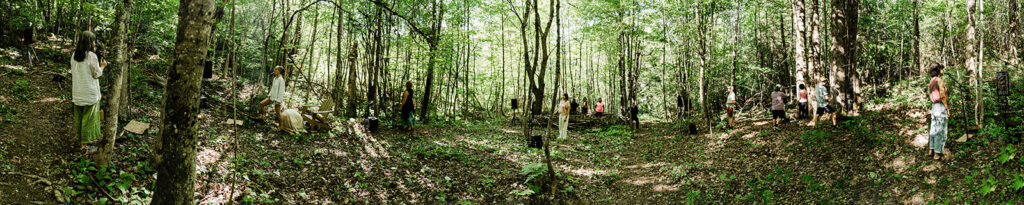
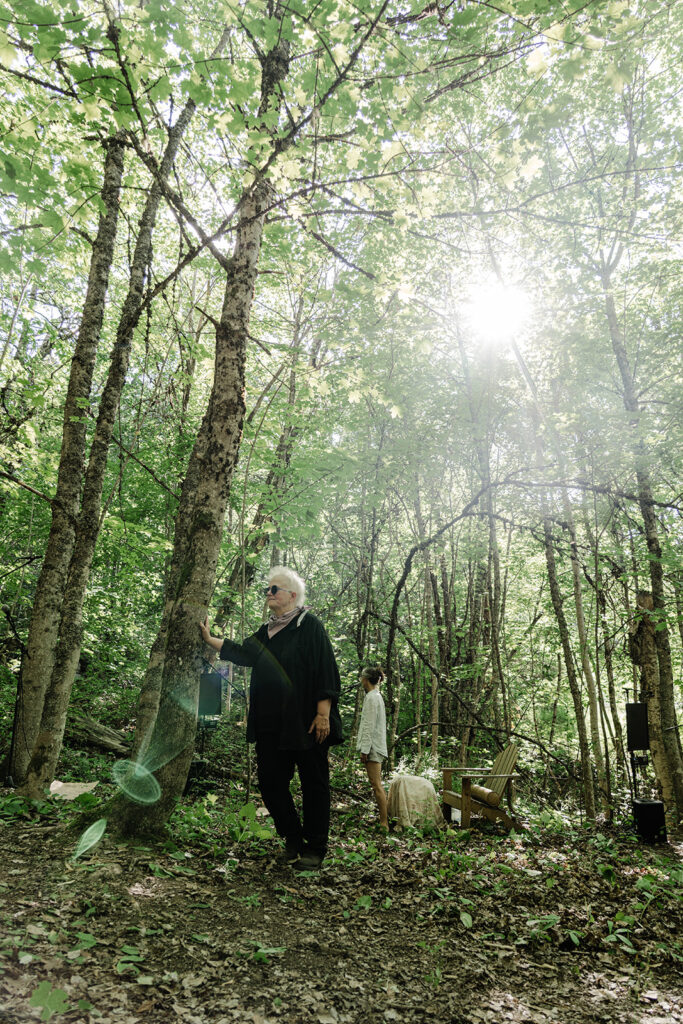
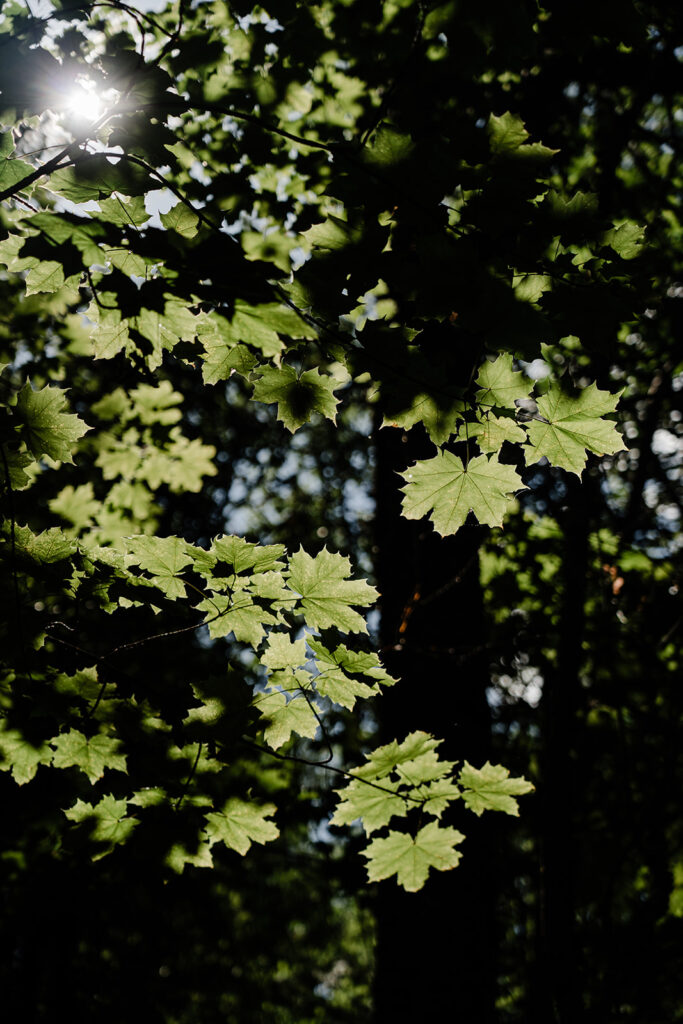
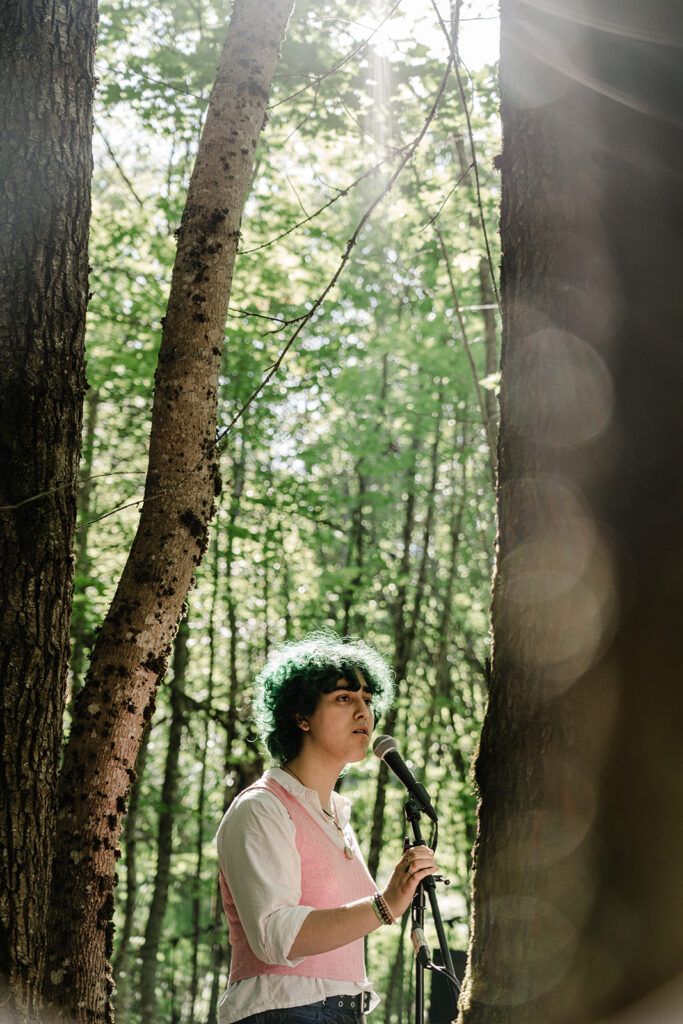
Rita McKeough’s offsite sound installation Thick Sound involves performance, collaboration, musical score, singers, and complex electronics, creating a call-and-response language in conversation with living organisms and the representative ecosystem of a forest glen. A decidedly environmental and experimental project with empathy and old school punk rock ethos at its core, Rita poses questions with heartbreaking curiosity and conviction, and it seems strangely appropriate that her work hangs in the space like an intangible idea that has no form. Within the gallery there is a placeholder photo of the forest where the Thick Sound performance takes place, proxy to the ephemeral and experiential experience of the performance that is flushed out with additional audio, film footage, and photography.
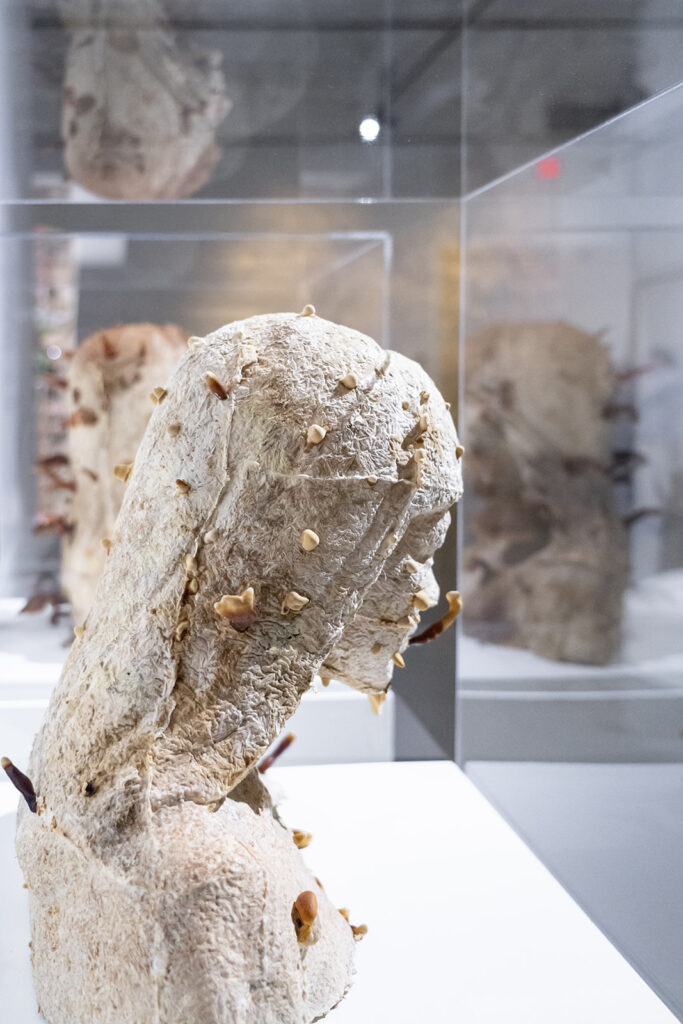
Illustrating another symbiotic relationship between humans and nature, Xiaojing Yan’s Lingzhi Girl sculptures literally and figuratively create a fertile world of/for mycelium mushrooms to inhabit and overwhelm, ornament and invade, via a medium of molded wood chips. The result is both beautiful and sci-fi freaky, and impresses ideas of resilience and regeneration, life and death, and the awe inspiring and often terrifying transitory nature of all things living, seen and unseen; here though, given form.
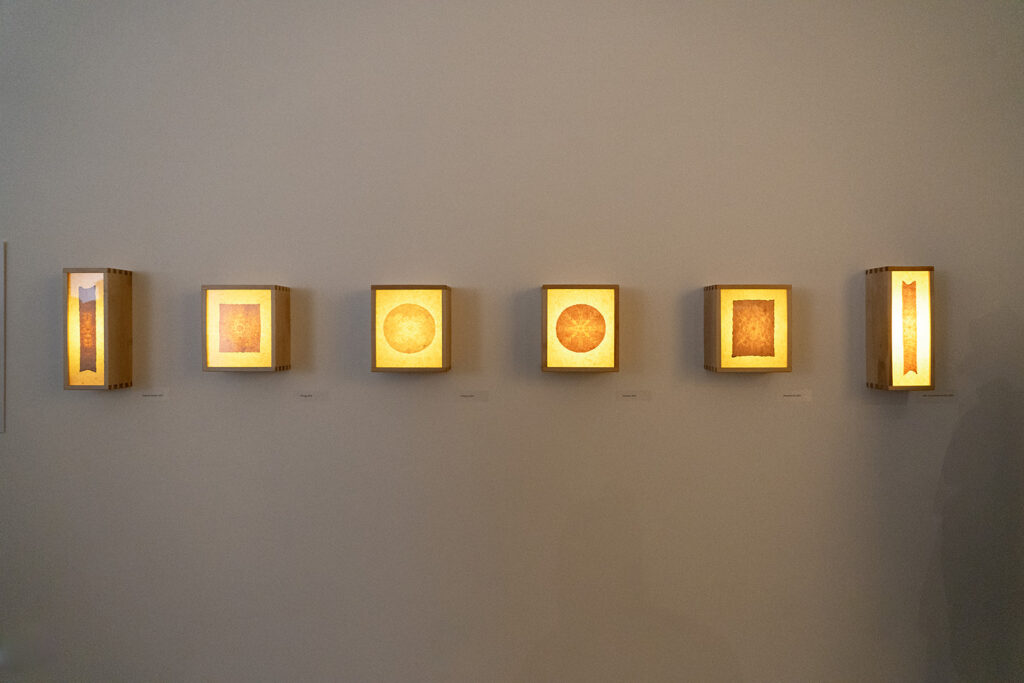
Bringing light to every detail, Pat Bruderer’s series of birch bark biting works show precision and symmetry that is awe inspiring to see. The works feel ageless, which is in keeping with the long and prolific practice by predominantly Indigenous women across Turtle Island since time immemorial. The level of intimacy that is evoked and required in the making of these works is hard to fathom, both in theme, design, and intention. The biting of pattern into wood is a reflective and constructive act, a proof of life and impression of hope and resilience.
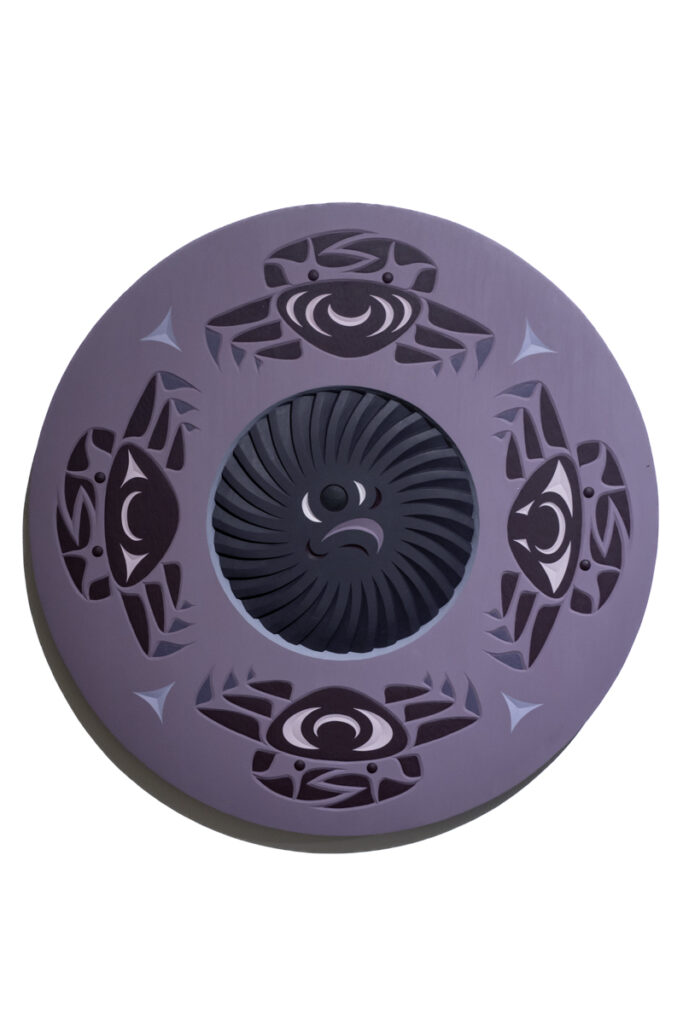
The works Beneath the Salish Sea and Woodcut I show the incredible range of Susan Point’s work, over time and by way of a practice and evolution of personality and perspective that both honors traditional techniques and traditions, such as the Salish Whorl, but also innovates and contemporizes those traditions.
All told the works that range around the gallery, contributing to the WOOD exhibition have one elemental thing in common—something that is ancient and layered but also modern and recognizable. Reckoning with this medium is representative of all attempts at enlightenment. The works take up their own space, and speak their own truth, but they also seem to commune with one another, with recognition and respect.
Arin Fay, Curator